

Relevant Backlinks: The Ultimate Guide to Better SEO Rankings (2026)
If you have studied search engine optimization (SEO), you have heard that backlinks are a top Google ranking factor. Though important, not every link is equal. One backlink from a niche-related site can carry more SEO value than several from unrelated, high-authority sites.
In 2026, Google’s algorithms are more sophisticated. Rather than just counting backlinks, search engines assess the relevance, context, trustworthiness, and usefulness of each link to your website. So, focus on earning high-quality backlinks rather than collecting as many links as possible.
Whether you run a blog, an eCommerce store, a SaaS company, or a local business, understanding backlink relevance can help you improve rankings, increase organic traffic, and build long-term authority.
In this guide, you’ll not only explore what relevant backlinks are and why they matter, but also gain insights into how Google evaluates them compared to high-authority links. Next, we’ll outline practical strategies to build a backlink profile that supports sustainable SEO growth.
What Are Relevant Backlinks?
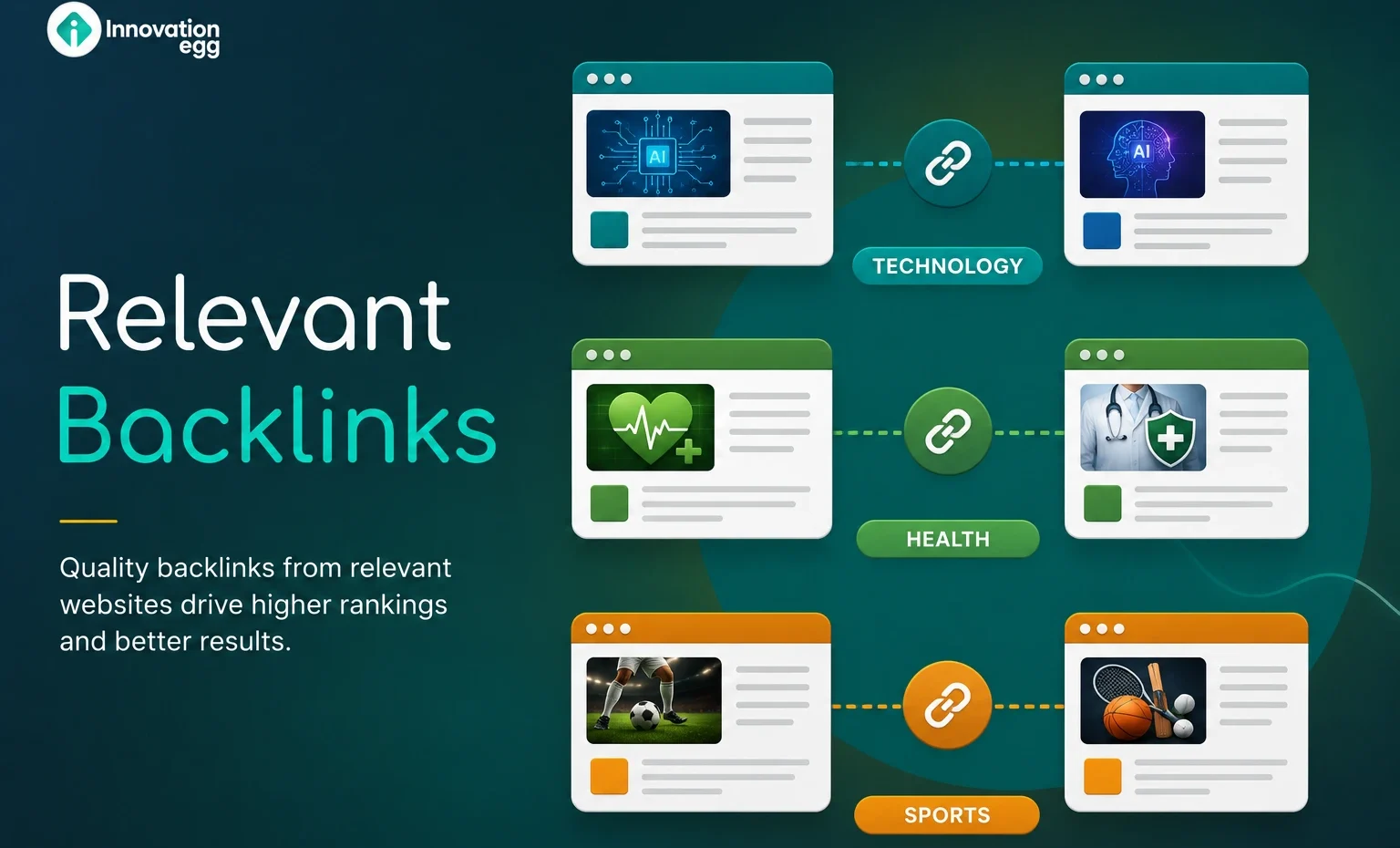
Relevant backlinks are hyperlinks from websites or webpages that share a similar topic, industry, audience, or purpose with your own website. These links provide context for both users and search engines, making them more valuable than links from unrelated sources.
For example:
- A digital marketing blog linking to an SEO agency.
- A healthcare website linking to a medical clinic.
- A travel blog recommending a hotel booking platform.
- A technology publication referencing a software company.
In each case, the linking page and the destination page are closely related, making the backlink naturally relevant.
Google aims to provide users with trustworthy information. When respected websites within your industry reference your content, they signal strongly to Google that your website is also a credible resource.
What Makes a Backlink Relevant?
Several factors determine whether a backlink is considered relevant:
- The overall topic of the linking website.
- The subject of the individual page containing the link.
- The context surrounding the hyperlink.
- The anchor text used.
- The intent behind the recommendation.
- The audience served by both websites.
A naturally placed backlink in a relevant article is far more valuable than a random link on an unrelated site.
Why Relevant Backlinks Matter for SEO
Search engines use backlinks as endorsements. However, endorsements only carry weight when they come from credible, contextually relevant sources.
Here are the primary reasons why backlinks are essential.
1. Improve Search Rankings
Relevant backlinks help search engines identify your website’s focus. When websites in your industry link to your content, Google gains confidence that your pages should rank higher for related keywords.
Instead of relying solely on website authority, Google increasingly considers topical expertise when ranking content.
2. Build Topical Authority
Topical authority refers to how knowledgeable your website appears to be in a specific subject area.
Imagine two websites:
Website A receives backlinks from marketing blogs, SEO publications, and business websites.
Website B receives backlinks from recipe websites, entertainment blogs, and gaming forums.
Even if both websites have the same number of backlinks, Website A will rank for SEO-related topics because its links reinforce its expertise.
3. Increase Organic Traffic
Relevant backlinks don’t just improve rankings; they also send qualified referral traffic.
Someone reading an article about search engine optimization is much more likely to click a link leading to another SEO-related resource than an unrelated website.
These visitors spend more time on your site, engage with your content, and often convert because the backlink aligns with their interests.
4. Strengthen Trust Signals
Google wants to recommend trustworthy websites.
When reputable websites within your niche consistently reference your content, they reinforce your credibility. Over time, their mentions improve how search engines evaluate your site’s expertise and reliability.
Trust is particularly important in competitive industries such as finance, healthcare, legal services, and technology.
5. Support Long-Term SEO Growth
SEO is a long-term strategy.
Relevant backlinks provide value for months or years, especially when they come from evergreen content that continues to attract visitors.
Rather than chasing quick wins, building high-quality, relevant backlinks forms a stronger foundation for sustainable rankings.
How Google Evaluates Relevant Backlinks
Google doesn’t assign the same value to every backlink. Instead, it considers multiple signals before deciding how much influence a link should have.
Website Relevance
The first consideration is whether the linking website operates in a similar niche.
For example, a cybersecurity blog linking to an antivirus company is highly relevant because both serve similar audiences.
Conversely, a fashion blog linking to accounting software offers little topical relevance.
Page-Level Relevance
Even if an entire website covers your industry, Google also examines the specific page where the backlink appears.
A marketing website’s article on email marketing may link to your SEO guide. Although both topics fall under digital marketing, a link from an SEO-specific article is usually more relevant.
The closer the topics align, the stronger the signal becomes.
Context Around the Link
Google analyzes the words surrounding the hyperlink.
A backlink placed within a detailed paragraph about your expertise carries more weight than one inserted in a footer, sidebar, or unrelated list.
Context helps search engines understand why the link exists.
Anchor Text
Anchor text is the clickable portion of a hyperlink.
Healthy backlink profiles include a mix of:
- Branded anchors
- Partial keyword anchors
- Generic anchors
- Natural sentence anchors
If you overuse exact-match keywords, your profile can appear manipulative. Instead, ensure links fit naturally into the surrounding content.
Editorial Placement
Google prefers editorially earned links.
Another publisher includes an editorial backlink because the link genuinely adds value for readers.
These links often outperform paid, automated, or excessive directory submissions because they reflect authentic recommendations.
Relevant Backlinks vs High Authority Backlinks
Many believe the website with the highest authority provides the best backlink.
Authority certainly matters, but relevance often determines how useful that authority becomes.
| Relevant Backlinks | High Authority but Irrelevant Links |
| Come from websites in your niche | May come from unrelated industries |
| Strengthen topical authority | May offer limited topical signals |
| Send highly targeted referral traffic | Traffic is often less qualified |
| Support sustainable SEO growth | Value depends on context |
| Reinforce expertise | Can appear less natural if unrelated |
If you run a fitness coaching business, a link from a respected health magazine offers more SEO value than one from a well-known car website, regardless of the latter’s authority.
Ideally, you earn backlinks that combine both relevance and authority.
Why Quality Always Beats Quantity
Many website owners still believe that acquiring hundreds of backlinks will automatically improve rankings.
Modern SEO no longer rewards quantity alone.
Google evaluates the overall quality of your backlink profile, including:
- Relevance
- Trustworthiness
- Context
- Editorial value
- User benefit
- Diversity
You can outperform thousands of low-quality links by building a smaller number of high-quality, contextually relevant backlinks.
This shift has made strategic link acquisition a central part of modern SEO. Businesses that invest in ethical link-building services often prioritize relevance over volume, focusing on earning editorial mentions from trusted industry sources rather than pursuing mass link placement.
In the next section of this guide, you will explore the different types of relevant backlinks, practical methods for finding backlink opportunities, and proven strategies to build a stronger backlink profile that supports long-term rankings.
Types of Relevant Backlinks
Not all backlinks are earned the same way. While relevance matters, the source and placement of a backlink also affect its SEO value. Knowing the types of relevant backlinks can help you diversify and naturalize your link profile.
Editorial Backlinks
Editorial backlinks are considered the gold standard in SEO. These links are placed naturally by publishers or website owners because they find your content valuable enough to reference.
For example, if you publish an in-depth guide on technical SEO and another marketing blog cites your article as a trusted resource, you’ve earned an editorial backlink.
These links are highly valuable because they are voluntary, contextually relevant, and embedded in high-quality content.
Guest Post Backlinks
Guest posting remains one of the most effective ways to earn relevant backlinks when done correctly.
Instead of writing for any website that accepts submissions, focus on reputable blogs within your industry. A guest article should educate readers, provide original insights, and naturally reference your website where appropriate.
Avoid publishing low-quality guest posts solely for backlinks. Google’s algorithms can identify manipulative practices, making quality far more important than quantity.
Resource Page Backlinks
Many websites maintain dedicated resource pages that list useful tools, guides, or educational materials.
If you’ve created comprehensive content, calculators, templates, or research reports, these pages can become excellent backlink opportunities.
Because resource pages are designed to help users, backlinks placed there often generate referral traffic alongside SEO benefits.
Digital PR Backlinks
Digital PR focuses on creating newsworthy content that journalists, bloggers, and online publications want to reference.
Examples include:
- Original research
- Industry surveys
- Market reports
- Trend analysis
- Expert commentary
When authoritative websites cite your findings, you earn highly relevant backlinks while also increasing brand visibility.
Business Directory Backlinks
Quality business directories still have value when they are relevant to your industry or location.
Examples include:
- Industry associations
- Local chambers of commerce
- Professional organizations
- Trusted business listings
Avoid submitting your website to hundreds of low-quality directories, as they provide little value and may weaken your backlink profile.
Local Backlinks
Local businesses benefit significantly from backlinks earned within their geographic area.
Examples include:
- Local newspapers
- Community organizations
- Event sponsorships
- Educational institutions
- City business directories
These links strengthen both local SEO signals and community credibility.
Podcast and Interview Backlinks
Appearing as a guest on podcasts or expert interviews can generate valuable backlinks from relevant websites.
Besides improving SEO, podcast appearances expose your expertise to new audiences and help build authority within your niche.
Benefits of Relevant Backlinks
Building relevant backlinks offers benefits that extend far beyond improving keyword rankings.
Higher Search Visibility
Relevant backlinks help search engines understand the relationship between your website and your industry.
As more trusted websites reference your content, Google gains greater confidence in displaying your pages for competitive search terms.
Better Referral Traffic
Visitors who arrive through relevant backlinks are already interested in your topic.
This targeted traffic generally leads to:
- Lower bounce rates
- Longer session durations
- Higher engagement
- Better conversion rates
Instead of attracting random visitors, relevant backlinks introduce your website to people genuinely interested in your products, services, or content.
Improved Brand Authority
When respected websites mention your brand, readers begin to recognize your expertise.
Over time, these consistent mentions help position your business as a trusted resource within your industry.
Authority isn’t built overnight, but every relevant backlink contributes to a stronger online reputation.
Faster Content Discovery
Search engines regularly crawl authoritative websites.
When these websites link to newly published pages on your site, search engine crawlers often discover and index your content more quickly.
This allows fresh content to appear in search results sooner.
Stronger Topical Signals
Relevant backlinks reinforce your website’s focus.
If most backlinks originate from websites covering similar subjects, search engines gain a clearer understanding of your expertise.
This consistency supports better rankings across multiple related keywords rather than just individual pages.
How to Find Relevant Backlink Opportunities
Finding quality backlink opportunities requires research and patience. Fortunately, there are several proven methods that consistently produce results.
Analyze Your Competitors
One of the easiest ways to discover backlink opportunities is to study competitors who already rank for your target keywords.
Look at:
- Blogs linking to them
- Industry directories
- Resource pages
- News websites
- Educational websites
Many of these websites may also be interested in linking to your content if it provides equal or greater value.
Use Google Search Operators
Advanced Google searches can uncover relevant websites that accept guest posts or list helpful resources.
Examples include:
- keyword + “write for us”
- keyword + “guest post”
- keyword + “resources”
- keyword + “recommended tools”
- keyword + “useful links”
These searches reveal websites actively publishing industry-related content.
Find Broken Links
Broken link building involves identifying outdated or broken links on relevant websites and suggesting your content as a replacement.
Website owners appreciate being notified about broken resources, making this a mutually beneficial strategy.
Monitor Brand Mentions
Sometimes websites mention your business without linking to it.
By monitoring these mentions, you can politely ask publishers to convert them into clickable backlinks.
Since they already recognize your brand, these requests often have a higher success rate.
Build Relationships
Successful link building often begins with genuine networking.
Connect with:
- Industry bloggers
- Journalists
- Podcast hosts
- Influencers
- Website owners
- Community leaders
Meaningful relationships frequently lead to natural collaboration opportunities and editorial backlinks.
15 Proven Ways to Build Relevant Backlinks
Creating valuable content is only one part of the process. Promotion is equally important.
Here are fifteen effective strategies.
1. Publish Comprehensive Guides
Long-form resources often become reference materials for other websites.
2. Conduct Original Research
Unique statistics and survey data naturally attract citations.
3. Create Free Tools
Calculators, templates, and generators encourage other websites to recommend your resources.
4. Write Guest Articles
Contribute expert content to respected industry publications.
5. Build Industry Resource Pages
Helpful collections of tools and references frequently earn backlinks.
6. Use Broken Link Outreach
Replace outdated resources with your updated content.
7. Create Infographics
Visual content remains highly shareable and often earns citations.
8. Publish Case Studies
Real-world success stories build trust while attracting editorial references.
9. Offer Expert Quotes
Journalists regularly seek expert opinions for articles.
10. Appear on Podcasts
Industry interviews generate both backlinks and brand awareness.
11. Publish Annual Reports
Industry reports become valuable reference sources.
12. Sponsor Relevant Events
Community involvement can generate backlinks from event websites.
13. Earn Educational Links
Universities and educational organizations frequently recommend high-quality resources.
14. Update Existing Content
Refreshing older articles often attracts new backlinks as they regain visibility.
15. Promote Content Consistently
Outstanding content rarely earns backlinks without promotion.
Share your articles through:
- Email newsletters
- Professional communities
- Social media
- Industry forums
- Networking groups
Visibility increases the likelihood of earning editorial references.
Common Link Building Mistakes to Avoid
Even experienced marketers make backlink mistakes that limit SEO performance.
Avoid these common issues.
Prioritizing Quantity Over Quality
Hundreds of low-quality backlinks rarely outperform a handful of highly relevant editorial links.
Buying Spammy Links
Cheap backlinks from unrelated websites may produce short-term gains but often create long-term SEO risks.
Ignoring Content Quality
Exceptional content naturally attracts more backlinks than thin, generic articles.
Always create resources that solve real problems for your audience.
Overusing Exact-Match Anchor Text
Natural backlink profiles include a healthy mix of branded, generic, and descriptive anchor text.
Excessive keyword-rich anchors can appear manipulative.
Chasing Every Backlink Opportunity
Not every backlink deserves your effort.
Focus on opportunities that improve your website’s authority, relevance, and reputation rather than simply increasing backlink numbers.
In the final part of this guide, we’ll cover backlink audits, the best SEO tools, real-world examples, frequently asked questions, and actionable steps you can use to strengthen your backlink profile for long-term search visibility.
How to Audit Your Backlink Profile
Building relevant backlinks is only half the equation. Regularly auditing your backlink profile ensures that your website maintains a healthy, trustworthy link ecosystem. Search engines continuously evaluate backlinks, and outdated or spammy links can dilute the overall quality of your profile.
A backlink audit helps you identify which links contribute to your SEO success and which may require attention.
Check Topical Relevance
Start by reviewing the websites linking to your pages.
Ask yourself:
- Does the website cover a similar industry?
- Would its audience genuinely benefit from visiting your page?
- Does the surrounding content relate to your topic?
The more relevant the referring domains are, the stronger your backlink profile becomes.
Evaluate Link Quality
Not every backlink carries equal weight.
Review each backlink for:
- Website credibility
- Content quality
- Organic traffic
- Editorial standards
- User experience
Links from well-maintained websites generally provide more long-term value than those from abandoned or low-quality domains.
Analyze Anchor Text Diversity
Natural backlink profiles contain a healthy mix of anchor text.
Examples include:
- Brand name
- Website URL
- Generic phrases
- Partial keyword phrases
- Descriptive text
If every backlink uses the exact same keyword, search engines may view the pattern as unnatural.
Review Link Placement
Backlinks placed naturally within useful content generally provide more value than links hidden in:
- Footers
- Sidebars
- Author bios
- Advertisement sections
Editorial placement remains one of the strongest trust signals.
Identify Toxic Backlinks
Occasionally, websites accumulate spammy backlinks without actively building them.
Common warning signs include:
- Gambling websites
- Adult websites
- Foreign-language websites unrelated to your business
- Automated directories
- Link farms
While Google automatically ignores many low-quality links, it’s still good practice to monitor your backlink profile regularly.
Best Tools for Finding Relevant Backlinks
Professional SEO tools simplify backlink research and competitor analysis. Each platform offers unique features depending on your goals and budget.
| Tool | Best Use |
| Google Search Console | Monitor backlinks pointing to your website |
| Ahrefs | Comprehensive backlink analysis and competitor research |
| Semrush | Link gap analysis and outreach opportunities |
| Moz Pro | Domain authority and backlink tracking |
| Majestic | Trust Flow and Citation Flow analysis |
| BuzzSumo | Content discovery and digital PR opportunities |
| Hunter.io | Finding outreach email addresses |
While no single tool is perfect, combining multiple data sources provides a more complete understanding of your backlink profile.
Real-World Examples of Relevant Backlinks
Understanding backlink relevance becomes easier with practical examples.
Example 1: SEO Agency
A digital marketing blog publishes an article explaining technical SEO and links to an agency’s detailed guide about keyword clustering.
This backlink is valuable because both websites serve similar audiences and discuss closely related topics.
Example 2: Healthcare Business
A medical association references a clinic’s research on patient care.
Since both organizations operate within healthcare, the backlink strengthens topical relevance and credibility.
Example 3: Travel Website
A tourism blog recommends a hotel booking platform while discussing accommodation options in a popular destination.
Readers naturally benefit from the recommendation, making the backlink both useful and relevant.
Example 4: Educational Platform
A university resource page links to a free online learning guide.
Educational backlinks often carry strong trust signals because they originate from respected institutions.
How Relevant Backlinks Support Long-Term SEO Success
SEO is no longer about finding shortcuts or manipulating algorithms. Sustainable growth comes from consistently producing content that deserves recognition.
Relevant backlinks contribute to long-term success by helping search engines understand your expertise.
When your backlink profile grows naturally over time, your website benefits from:
- Increased trust
- Better keyword rankings
- Higher organic traffic
- Improved topical authority
- Stronger brand recognition
These improvements don’t happen overnight, but they create lasting results that are difficult for competitors to replicate.
Common Myths About Relevant Backlinks
Many misconceptions still exist regarding backlink building.
Myth 1: More Backlinks Always Mean Better Rankings
Reality: Quality consistently outperforms quantity.
Myth 2: Domain Authority Is Everything
Reality: Authority matters, but topical relevance often plays an equally important role.
Myth 3: Every Backlink Must Use Keywords
Reality: Natural backlink profiles include branded and generic anchor text alongside descriptive phrases.
Myth 4: Link Building Is Finished Once You Reach Page One
Reality: Competitors continue earning backlinks, meaning SEO requires ongoing improvement.
Practical Checklist for Building Relevant Backlinks
Use this checklist before pursuing any backlink opportunity.
- Is the website relevant to my niche?
- Does the page discuss a related topic?
- Will readers genuinely benefit from visiting my page?
- Is the content high quality?
- Does the website receive real organic traffic?
- Is the backlink editorially placed?
- Does the anchor text sound natural?
- Would I still want this backlink even if Google didn’t exist?
If you answer “yes” to most of these questions, the backlink is likely worth pursuing.
Final Thoughts
Relevant backlinks remain one of the most powerful ranking signals in modern SEO because they demonstrate trust, expertise, and topical authority. Rather than chasing every available backlink, successful websites focus on earning recommendations from credible sources within their industry.
By consistently publishing valuable content, building genuine relationships, and monitoring your backlink profile, you create a foundation for sustainable organic growth. Search engines reward websites that prioritize quality and user value over shortcuts, making relevance an essential part of every successful SEO strategy.
A strong backlink profile is also a cornerstone of off page seo, complementing on-page optimization and technical improvements to create a well-rounded search strategy. Businesses that consistently invest in authoritative, niche-specific mentions are more likely to achieve stable rankings over time.
Whether you’re managing a personal blog, an online store, or an enterprise website, remember that backlinks are not simply numbers on a report; they are endorsements of your expertise. Organizations such as Innovationegg and other SEO-focused brands often emphasize earning meaningful, contextually relevant links because they contribute to long-term visibility, stronger credibility, and sustainable search performance.
The future of SEO belongs to websites that create exceptional content, earn genuine recommendations, and focus on relevance above all else. If you adopt this mindset, your backlink strategy will continue delivering value long after individual ranking updates have come and gone.
Frequently Asked Questions
Are relevant backlinks better than high-authority backlinks?
The strongest backlinks combine both relevance and authority. However, if forced to choose, a highly relevant backlink from a respected niche website often provides greater SEO value than an unrelated backlink from a larger website.
How many relevant backlinks do I need?
There is no universal number.
The quantity required depends on:
- Your industry
- Keyword competition
- Existing authority
- Content quality
- Competitor backlink profiles
Focus on consistently earning high-quality backlinks rather than targeting a specific number.
Can irrelevant backlinks hurt SEO?
Occasional irrelevant backlinks are normal and unlikely to cause problems.
However, building large numbers of unrelated or manipulative backlinks may weaken your backlink profile and reduce trust.
Are nofollow backlinks useful?
Yes.
Although nofollow links may pass limited ranking signals, they still provide:
- Referral traffic
- Brand visibility
- Link diversity
- Opportunities for future editorial mentions
A natural backlink profile typically includes both follow and nofollow links.
Do guest posts still work?
Absolutely.
Guest posting remains effective when articles are:
- Original
- Helpful
- Published on reputable websites
- Relevant to your niche
Avoid mass-produced guest posts created solely for backlink acquisition.
How long does it take for backlinks to improve rankings?
The timeline varies.
Some backlinks influence rankings within weeks, while others may take several months depending on factors such as crawling frequency, website authority, and competition.
SEO should always be viewed as a long-term investment.
What is the difference between contextual backlinks and relevant backlinks?
Contextual backlinks are placed naturally within the body of content.
Relevant backlinks are links from websites or pages that discuss similar topics.
The strongest backlinks are both contextual and relevant.
