

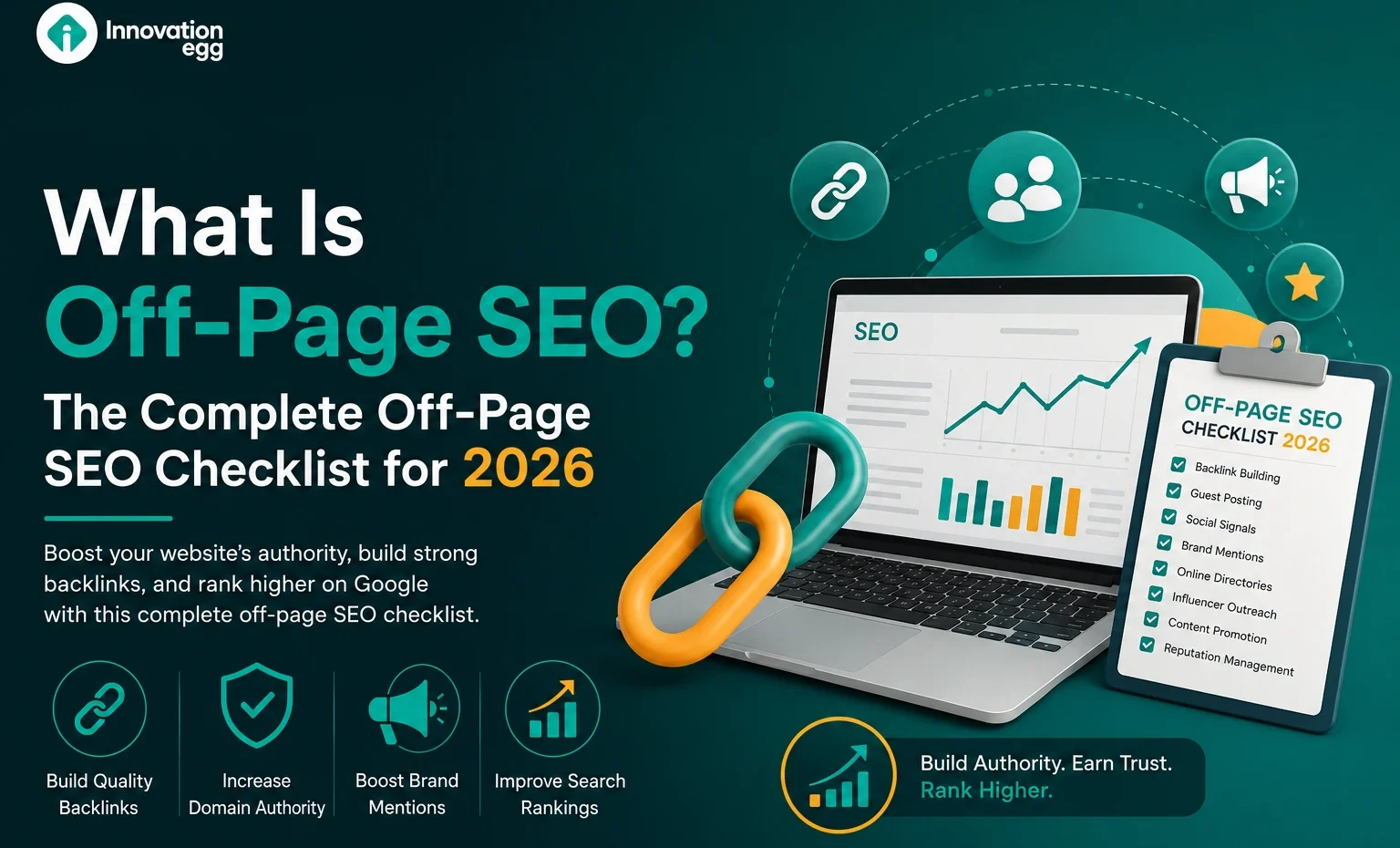
What Is Off-Page SEO? The Complete Off-Page SEO Checklist for 2026
In digital marketing, ranking on Google requires more than just optimizing web pages. Search engines now prioritize authority, trust, and reputation signals from off-site sources. Off-page SEO is crucial for this.
Off-page SEO encompasses all efforts outside your website that enhance its search engine position. These activities help search engines assess your site’s value, trustworthiness, and relevance against competitors.
This guide systematically defines off-page SEO, outlines its enduring relevance in 2026, and delivers a comprehensive, actionable checklist to help you dominate the search rankings.
What Is Off-Page SEO?
Off-page SEO includes all external actions that influence your site’s search rankings. Unlike on-page SEO, which optimizes internal elements, off-page SEO establishes your site’s authority and reputation online.
The overarching objective of off-page SEO is to establish your website as trustworthy, popular, and relevant to search engines.
Key Elements of Off-Page SEO
- Backlinks from other websites
- Brand mentions across the web.
- Social media engagement
- Guest posting on authority sites
- Online reviews and reputation signals
- Influencer collaborations
- Content sharing and virality
When executed effectively, off-page SEO can dramatically increase your website’s domain authority and organic rankings.
Why Off-Page SEO Is Important in 2026
Search engines are increasingly sophisticated. In 2026, Google’s algorithm rigorously prioritizes E-E-A-T: Experience, Expertise, Authoritativeness, and Trustworthiness.
Off-page SEO is essential for building these signals.
Benefits of Off-Page SEO
- Improves search engine rankings
- Builds website authority
- Increases organic traffic
- Enhances brand credibility
- Helps compete in competitive niches
- Builds long-term digital reputation
Without off-page SEO, even high-quality content may struggle to rank.
Off-Page SEO vs On-Page SEO
To fully understand SEO strategy, it’s important to differentiate between on-page and off-page SEO.
| On-Page SEO | Off-Page SEO |
| Content optimization | Backlink building |
| Internal linking | External linking |
| Meta tags & structure | Brand mentions |
| Keyword usage | Social signals |
| Page speed & UX | Authority building |
Both approaches work together to improve rankings, but off-page SEO strengthens your site’s credibility.
How Off-Page SEO Works
Search engines evaluate external signals to measure your website’s popularity and trustworthiness. For instance, when numerous authoritative sites link to your content, Google considers your site valuable.
These signals include:
- Number of backlinks
- Quality of referring domains
- Anchor text relevance
- Social engagement
- Brand searches
- Online reputation
Fortifying these signals is critical—websites with the strongest off-page indicators are most likely to achieve top rankings.
The Complete Off-Page SEO Checklist for 2026
Here is a step-by-step checklist to help you build a powerful off-page SEO strategy.
1. Build High-Quality Backlinks
Backlinks are central to off-page SEO. A backlink is a link from another website that points to your site.
Focus on:
- High-authority domains
- Relevant niche websites
- Natural link placements
- Editorial links
Steer clear of spammy or low-quality links, as they can damage your rankings.
2. Guest Posting on Authority Websites
Guest posting remains one of the most effective tactics for securing powerful backlinks. Contribute insightful, high-value content to respected websites in your field, integrating a reference to your own site.
Benefits include:
- Exposure to new audiences
- Strong backlinks
- Brand credibility
3. Broken Link Building
This strategy involves finding broken links on other websites and suggesting your content as a replacement.
Steps:
- Find broken links using SEO tools.
- Create relevant content
- Reach out to website owners.
4. Social Media Engagement
While social signals are not recognized as direct ranking factors, they demonstrably increase visibility and traffic.
Focus on:
- Sharing blog posts
- Engaging with followers
- Posting consistently
- Building brand awareness
5. Influencer Outreach
Partnering with proven influencers delivers measurable increases in brand visibility and draws high-value traffic to your website.
You can:
- Ask for product mentions.
- Collaborate on content
- Get featured in reviews.
6. Brand Mentions
Even unlinked mentions of your brand help search engines gauge your authority.
Try to get mentions through:
- PR campaigns
- Guest features
- Online discussions
7. Local SEO Citations
If you target a local audience, listing your business in directories is important.
Examples:
- Google Business Profile
- Local directories
- Industry-specific listings
8. Forum Participation
Engaging in forums and Q&A platforms cultivates authority and attracts traffic.
Popular platforms include:
- Quora
- Niche communities
9. Content Marketing & Shareable Content
Producing valuable, shareable content naturally earns backlinks.
Types of content:
- Guides
- Infographics
- Case studies
- Research articles
10. Competitor Backlink Analysis
Precisely analyze your competitors’ backlink networks and strategically replicate effective approaches to extend your own authority.
Use SEO tools to:
- Identify backlink sources
- Find link gaps
- Discover new opportunities
11. Monitor Your Backlink Profile
Routinely monitor your backlinks to verify quality and eliminate harmful links.
Keep track of:
- New backlinks
- Lost backlinks
- Spam links
Advanced Off-Page SEO Strategies for 2026
SEO best practices continually evolve—adopting advanced off-page strategies is now indispensable for sustained industry leadership.
Digital PR
Getting featured on news websites and blogs increases authority.
AI-Driven Outreach
Leverage AI-powered tools to systematize outreach initiatives and systematically identify premium link-building opportunities.
Podcast Appearances
Being featured on podcasts helps build authority and brand awareness.
Common Off-Page SEO Mistakes to Avoid
- Buying low-quality backlinks
- Over-optimized anchor text
- Ignoring brand reputation
- Spamming forums
- Using irrelevant backlinks
Steering clear of these missteps is essential for building a resilient, authoritative SEO profile.
Tools for Off-Page SEO
Some useful tools include:
- Ahrefs
- SEMrush
- Moz
- Google Search Console
- BuzzSumo
These tools track backlinks and analyze competitor strategies.
Conclusion
Off-page SEO is a critical strategy that substantially reinforces your website’s authority, trust, and visibility across the internet. In 2026, it remains among Google’s primary ranking factors.
Follow this exhaustive off-page SEO checklist to steadily elevate your rankings and achieve substantial, lasting organic traffic growth. Incorporating professional Link Building Services can further strengthen your backlink profile, improve domain authority, and help your website earn higher search engine rankings.
Remember, SEO is not just about content; it’s about your site’s reputation.
FAQs
1. What is off-page SEO in simple terms?
Off-page SEO refers to activities outside your website to improve its search engine rankings, such as building backlinks, generating brand mentions, and promoting on social media.
2. Why is off-page SEO important for ranking?
Off-page SEO provides compelling signals of authority, trustworthiness, and popularity, each of which directly influences your search rankings.
3. What are the main techniques of off-page SEO?
The primary methods include building high-quality backlinks, authoritative guest posting, influencer engagement, social media leadership, participation in expert forums, and securing brand mentions.
4. How do backlinks help off-page SEO?
Backlinks serve as authoritative endorsements from other sites. Premium-quality backlinks rigorously signal to Google the value and trustworthiness of your content.
5. What is the difference between on-page and off-page SEO?
On-page SEO focuses on optimizing elements of your website (content, meta tags, structure), while off-page SEO focuses on external signals such as backlinks and brand authority.
6. How long does off-page SEO take to show results?
Off-page SEO is an investment with lasting returns. Depending on the competition and authority of the links, results may manifest in weeks or take several months.
7. Can social media help with off-page SEO?
Yes, social media increases content visibility, drives traffic, and helps generate engagement signals that indirectly support SEO performance.
8. What are the common mistakes in off-page SEO?
Major errors include deploying illicit backlink schemes, over-engineering anchor text, purchasing poor links, and neglecting diligent brand reputation management.
