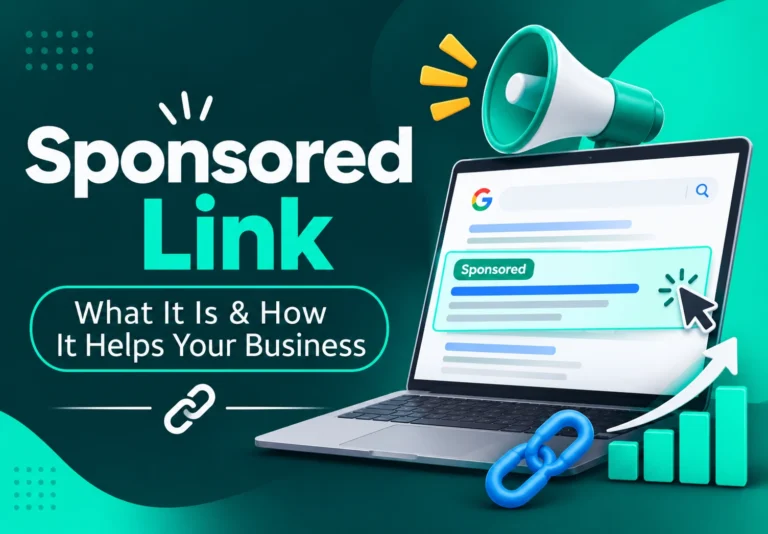
In digital marketing, links play an important role in helping websites reach new audiences and build online visibility. One type of link that businesses and publishers commonly use is a sponsored link. It is usually created as part of a paid promotion, advertising campaign, sponsored article, or partnership between a website owner and a brand.
Understanding how sponsored links work is important for businesses, marketers, publishers, and SEO professionals. When used correctly, they can generate referral traffic, increase brand awareness, and connect businesses with relevant audiences. However, paid links must be handled properly to avoid search engine guideline issues.
What Is a Sponsored Link?
A sponsored link is a link that is placed on a website as part of a commercial or paid arrangement. In simple terms, a business pays a publisher or website owner to promote its website, product, service, or content.
For example, an online store may pay a popular website to publish an article about its products. The article can contain a link that takes readers to the store. Because the placement is commercially sponsored, the link should be appropriately identified.
Sponsored links can appear in blog posts, product reviews, advertisements, news content, affiliate promotions, and other forms of online content.
The main purpose is usually to reach a relevant audience rather than obtain a link. A good sponsored placement should provide value to readers while helping the advertiser attract potential customers.
How Do Sponsored Links Work?
The process is generally straightforward.
Advertiser Pays for Placement
The process starts when a business decides to promote its website, product, or service on another website. The advertiser and publisher agree on the content type, placement, duration, and payment.
The cost can vary depending on the website’s audience, authority, traffic, niche, and placement.
Publisher Adds the Link
After the agreement, the publisher creates or publishes the sponsored content. The link may point to a product page, service page, homepage, landing page, or useful resource.
For example, a travel website might publish sponsored content about a destination and include a link to a travel company’s website.
Link Is Marked With the rel=”sponsored” Attribute.
Paid links should be properly identified. Google recommends using the rel=”sponsored” attribute for links that are advertisements or paid placements.
A basic example looks like this:
<a href=”https://example.com” rel=”sponsored”>Visit Website</a>
This tells search engines that the link exists because of a commercial relationship.
Users Click the Link and Visit the Advertiser’s Website
Readers can click the link and visit the advertiser’s website. This can generate referral traffic and potentially lead to sales, inquiries, sign-ups, or other conversions.
Therefore, the value of a sponsored link is not limited to SEO. It can also work as a direct marketing channel.
What Is the rel=”sponsored” Link Attribute?
The rel=”sponsored” attribute is an HTML attribute used to identify links created as part of advertisements, sponsorships, or other paid arrangements.
It helps search engines understand the relationship behind a link. Instead of treating a paid placement like a naturally earned editorial link, search engines can recognize that the link has a commercial purpose.
This is different from a normal editorial link, where a website owner independently chooses to reference another website because the resource is useful or relevant.
Several link attributes can communicate different relationships:
- rel=”sponsored” — used for paid or sponsored placements.
- rel=”nofollow” — tells search engines not to associate the link with the site or crawl it for ranking purposes in the traditional way.
- No special attribute — generally used for ordinary links when no special relationship needs to be specified.
Using the appropriate attribute makes the relationship between the publisher and advertiser clearer.
Sponsored Links vs Regular Backlinks
Sponsored and regular backlinks can look similar to website visitors, but their purpose and relationship can be different.
| Feature | Sponsored Link | Regular Backlink |
| Payment | Usually paid | Usually unpaid |
| Main purpose | Advertising or promotion | Referral or editorial value |
| SEO attribute | rel=”sponsored” | Usually none |
| Traffic | Yes | Yes |
| Ranking influence | Not intended to pass ranking credit | Can contribute when naturally earned |
A regular editorial backlink is normally created because another website considers your content useful enough to reference. A sponsored link, on the other hand, exists because of a commercial arrangement.
Both can bring visitors to a website, but businesses should not treat paid placements as a shortcut for manipulating search rankings.
Are Sponsored Links Good for SEO?
Sponsored links can be useful as part of a broader digital marketing strategy, but their main value should not come from trying to pass ranking signals through paid placements.
Search engines want websites to earn links naturally through valuable content, useful resources, research, products, and strong brand recognition. When a business pays for a link specifically to manipulate search rankings, it can create SEO risks.
However, a properly disclosed sponsored placement can still provide legitimate benefits. It can introduce a brand to a new audience, generate referral traffic, increase visibility, and potentially encourage people to discover and share the company’s content.
Businesses should focus on the overall marketing value of a placement rather than judging it only by whether the link affects rankings.
Sponsored Links vs Paid Links
Sponsored links and paid links are closely related terms. A sponsored link is generally a link associated with a commercial relationship, while “paid link” is a broader term that can describe links purchased for different purposes.
For example, a company might pay a publisher to create an article that introduces its service. The article may contain a sponsored link pointing to the company’s website.
The commercial relationship should be transparent. Publishers should clearly disclose sponsored content when appropriate, and the link itself should use the appropriate attribute.
The important distinction is between legitimate advertising and paying for links specifically to manipulate search rankings.
Benefits of Sponsored Links
When used properly, sponsored links can provide several marketing benefits.
Increase Brand Awareness
A sponsored article or placement can introduce a company to people who have never encountered its brand before.
Publishing content on a relevant website can help businesses reach audiences that already have an interest in their industry.
Generate Referral Traffic
Sponsored placements can send visitors directly to a website. If the publisher has an engaged audience, even a single placement can generate valuable traffic.
Audience quality is often more important than the number of visitors.
Reach a Targeted Audience
Businesses can choose websites that attract their ideal customers. For example, a fashion company may choose a fashion publication, while a software company may work with a technology website.
This makes sponsored promotion more targeted than many broad advertising methods.
Promote Products and Services
Sponsored content can explain the features and benefits of a product or service before directing readers to a relevant landing page.
This can be especially useful when the product requires some explanation before a customer makes a decision.
Support Content Marketing Campaigns
Sponsored placements can complement a larger content marketing strategy. Businesses can use them to distribute useful guides, research, case studies, and educational content to new audiences.
Potential Risks of Sponsored Links
Sponsored links can also create problems when they are used incorrectly.
Buying Links Purely to Manipulate Rankings
The biggest concern is purchasing links primarily to influence search rankings rather than for genuine advertising or audience exposure.
Businesses should avoid treating paid links as a guaranteed way to improve organic rankings.
Poor-Quality or Irrelevant Websites
A sponsored placement on an unrelated or low-quality website may produce little value.
For example, a business selling professional software would gain little from publishing content on a website with no connection to technology or business.
Lack of Proper Disclosure
Readers should be able to understand when content has been commercially sponsored. Clear disclosure helps maintain trust between publishers, brands, and audiences.
Excessive Paid Link Campaigns
Relying too heavily on sponsored placements can make a marketing strategy unbalanced. Businesses should combine paid promotion with useful content, digital PR, organic outreach, and naturally earned mentions.
Wasting Budget on Websites With Little Real Audience
A website may appear attractive because of certain SEO metrics but have very little genuine traffic or audience engagement.
Before paying for a placement, businesses should evaluate whether the website actually reaches people who may be interested in their products or services.
How to Use Sponsored Links Correctly
A successful sponsored campaign should focus on relevance, transparency, and audience value.
- Choose relevant websites: Work with publishers whose audience matches your target customers.
- Check website quality and audience: Look beyond basic SEO metrics and consider real traffic, content quality, and engagement.
- Make the commercial relationship clear: Sponsored content should be appropriately disclosed.
- Use the appropriate rel attribute: Mark paid placements correctly.
- Focus on useful content: Avoid creating thin articles that exist only to place a link.
- Track referral traffic and conversions: Measure clicks, leads, sales, and other meaningful results.
- Review campaign performance: Keep investing in placements that produce genuine business value.
Businesses that manage campaigns at scale can also use professional link-building services to organize outreach, publisher relationships, placement evaluation, and campaign management.
For any link campaign, relevance should remain a priority. Obtaining relevant backlinks from websites that genuinely relate to your industry can make a marketing campaign more useful for both brands and readers.
For online stores, sponsored campaigns can also be incorporated into e-commerce link-building strategies, especially when promoting product guides, buying resources, category content, and useful shopping information.
Sponsored Links vs Nofollow Links vs UGC Links
Different link attributes communicate different relationships.
rel=”sponsored”
This attribute is designed for paid advertisements, sponsorships, and other commercial link placements.
rel=”nofollow”
This attribute can be used when a website owner does not want to associate a link with their website or wants to indicate that the link should not be treated as a typical editorial endorsement.
rel=”ugc”
UGC stands for user-generated content. This attribute can be used for links within content created by users, such as forum posts and comments.
Choosing the right attribute depends on why the link exists and the relationship between the websites involved.
How to Check If a Link Is Sponsored
Website visitors may not always know whether a link is sponsored just by looking at it.
One way to check is to inspect the page’s HTML code.
Look for an attribute such as:
rel=”sponsored”
You can also check whether the article contains a disclosure such as “Sponsored,” “Advertisement,” or “Paid Partnership.”
Keep in mind that the commercial relationship may be explained through visible content or disclosure text rather than being obvious from the link itself.
Examples of Sponsored Links
Sponsored links can appear in several forms.
Sponsored Blog Article
A company pays a publisher to create an article related to its industry and include a link to its website.
Paid Product Review
A brand pays for a product review or promotional feature. The article may contain a link to the product page.
Sponsored News Placement
A company may sponsor content on a publication to increase awareness of a product, event, or campaign.
Influencer or Affiliate Promotion
Creators may promote a product or service through articles, videos, social media posts, or other content containing links.
Paid Directory Placement
A business may pay for a listing or promotional placement on a relevant industry directory.
Conclusion
A sponsored link is a useful digital marketing tool when its purpose is genuine promotion, audience reach, and referral traffic. Unlike a naturally earned editorial backlink, it usually exists because a business has a commercial relationship with the publisher.
The key is to use sponsored placements responsibly. Choose relevant websites, create useful content, disclose commercial relationships, and use the appropriate link attributes. Businesses should also measure real outcomes such as traffic, leads, conversions, and brand visibility.
When planned as part of a broader SEO and content strategy, sponsored links can complement other link-building benefits without becoming a shortcut for manipulating search rankings. Good campaigns focus on quality, relevance, transparency, and genuine value for the audience.
Regular performance tracking is also important. Link building reporting can help businesses understand where placements were published, how campaigns are performing, and which activities are generating meaningful results.
Frequently Asked Questions
What is a sponsored link?
A sponsored link is a link placed as part of a paid or commercial arrangement between an advertiser and a publisher. It is commonly used to promote a business, product, service, or piece of content.
Do sponsored links help SEO?
Their primary purpose should be advertising and referral traffic, not manipulating search rankings. Properly marked sponsored links can still provide brand exposure and valuable visitors.
What is the difference between sponsored and nofollow links?
A sponsored attribute specifically identifies a commercial or paid relationship. Nofollow is a broader link attribute that indicates the publisher does not want the link treated as a normal endorsement.
Should paid links use rel=”sponsored”?
Paid or sponsored placements should generally use the rel=”sponsored” attribute so search engines can understand the commercial nature of the link.
Are sponsored links safe for websites?
Sponsored links can be safe when they are used for legitimate advertising, placed on relevant websites, properly disclosed, and correctly marked. Problems can arise when paid links are used primarily to manipulate search rankings.