

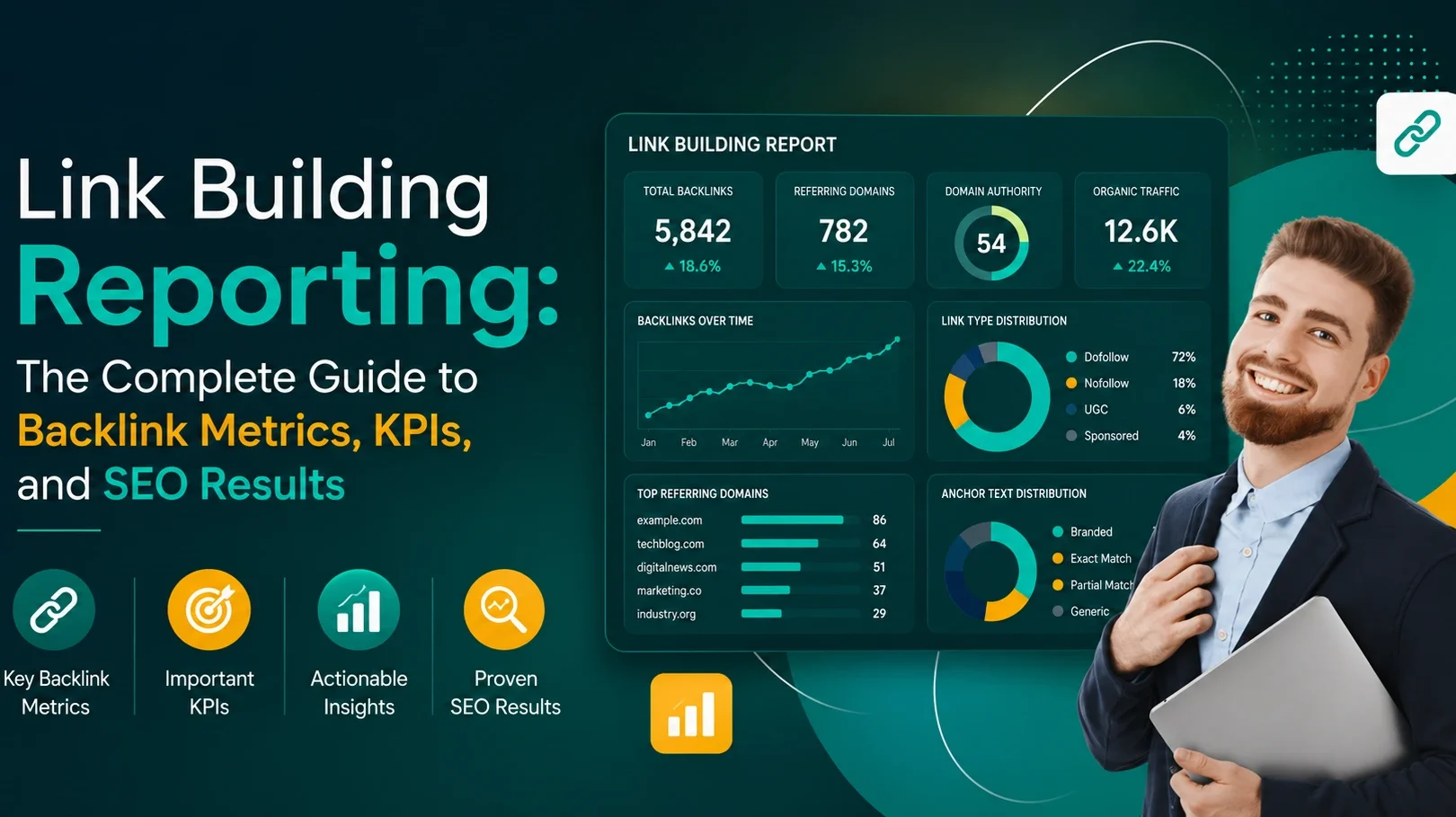
Link Building Reporting: The Complete Guide to Backlink Metrics, KPIs, and SEO Results
Link building drives SEO in 2026. Yet businesses must evaluate if their backlinks actually improve rankings, boost authority, and deliver results.
Serving as a crucial resource, link-building reports provide analysis on backlink growth, assess link quality, measure SEO performance, and highlight areas for future opportunities.
When proper reporting is absent, businesses often struggle to determine which strategies yield results and where to dedicate resources. Transforming backlink data into actionable insights through thorough reporting enables better decision-making.
Whether managing a small site or an enterprise, tracking key metrics and KPIs maximizes SEO value.
This guide covers key backlink metrics, KPIs, templates, tools, and how to measure SEO results.
What Is Link Building Reporting?
Collecting, analysing, and presenting data on backlinks and SEO performance defines the link-building reporting process.
A professional link-building report shows:
- How many backlinks have been created
- Where those links are coming from
- The authority and relevance of linking websites
- How backlinks impact rankings and traffic
- The overall success of SEO efforts
An effective report does more than merely count acquired backlinks; it highlights quality, relevance, and tangible business results.
A site with 10 authoritative, relevant backlinks often outperforms one with hundreds of low-quality links.
Why Link Building Reporting Matters for SEO
SEO requires constant improvement. Without accurate reporting, businesses can’t see if strategies deliver value.
Link building reports help businesses:
Measure SEO Growth
Reports reveal whether backlink efforts are improving website visibility, rankings, and organic traffic.
By comparing performance over time, SEO teams can understand growth trends and make data-driven decisions.
Identify Successful Strategies
Not every backlink strategy works equally well, so reporting is vital for learning which methods generate the best links and the greatest SEO impact.
Editorial mentions, industry partnerships, and valuable resources, for example, may prove more effective than basic link placements.
Improve Decision Making
With reporting data, SEO professionals can decide where time and resources will be most effective.
Metrics help determine:
- Which pages need more backlinks
- Which keywords are improving
- Which strategies need adjustment
Demonstrate SEO Value
For agencies and businesses, reports provide clear evidence of progress.
Instead of just listing tasks, reports should show outcomes such as improved visibility, traffic, and rankings.
Important Backlink Metrics to Track
Tracking the right metrics is essential to creating an accurate link-building report.
Total Backlinks
Total backlinks represent the number of external links pointing toward a website.
While backlink quantity matters, quality is far more important. Many low-quality backlinks offer little SEO value.
A good report should separate:
- New backlinks gained
- Lost backlinks
- Existing active backlinks
Referring Domains
Referring domains count the number of unique sites that link to your site.
For example:
- 500 backlinks from one website
- 100 backlinks from 100 different websites
The second approach provides stronger authority as more sites recommend you.
Link Authority
Authority measures the strength and credibility of sites linking to your pages.
High-quality links usually come from:
- Industry websites
- Trusted publications
- Educational resources
- Established brands
Analyzing whether acquired links originate from high-value sources is essential for any report.
Link Relevance
A relevant backlink connects your website with a topic-related source.
For example:
A marketing site benefits more from a backlink from a digital marketing publication than from an unrelated site.
More relevant links help search engines grasp your expertise.
Anchor Text Distribution
Anchor text is the clickable text in a backlink.
A healthy backlink profile includes different types of anchor text:
- Brand name anchors
- Natural phrases
- Partial keyword matches
- Generic anchors
Overusing exact-match keywords in anchor text creates SEO risks.
Follow and Nofollow Links
A report should track follow and nofollow links.
Follow links may pass authority; nofollow links can still provide:
- Referral traffic
- Brand exposure
- User engagement
Both types can contribute to overall online visibility.
Essential Link Building KPIs
KPIs help measure your SEO success.
New Backlinks Acquired
This measures new backlinks gained during a period.
Example:
| Month | New Backlinks |
| January | 35 |
| February | 52 |
| March | 75 |
Growth in quality backlinks indicates successful outreach and content promotion.
Growth of Referring Domains
More referring domains mean more sites value your content.
This metric is often more meaningful than backlink totals.
Keyword Ranking Improvements
Backlinks should boost search visibility.
Track:
- Target keywords
- Ranking positions
- Ranking improvements
- Featured snippet opportunities
Organic Traffic Growth
The main goal of link building is to increase valuable website traffic.
Reports should compare:
- Organic traffic before link building
- Current organic traffic
- Traffic growth percentage
Conversion Impact
SEO success is about more than traffic.
Track whether backlink improvements generate:
- Leads
- Sales
- Sign-ups
- Customer inquiries
How to Create an Effective Link Building Report
Reports should be clear and focus on meaningful results.
A complete report usually includes:
Campaign Overview
Include:
- Reporting period
- Goals
- Completed activities
- Overall progress
Example:
Reporting Period: January 2026
Goal: Increase website authority and improve keyword rankings
Links Built: 50 high-quality backlinks
Sample Monthly Link Building Report
| Metric | Previous Month | Current Month | Growth |
| New Backlinks | 35 | 68 | +94% |
| Referring Domains | 120 | 165 | +37% |
| High Authority Links | 15 | 28 | +86% |
| Organic Traffic | 18,500 | 24,700 | +33% |
| Ranking Keywords | 420 | 560 | +33% |
| Referral Traffic | 900 | 1,450 | +61% |
Backlink Quality Analysis Report
| Website | Link Type | Authority Level | Relevance | Status |
| Marketing Blog A | Editorial Link | High | Highly Relevant | Active |
| Industry News Site B | Mention Link | High | Relevant | Active |
| Resource Page C | Contextual Link | Medium | Relevant | Active |
This report helps businesses see if their links are valuable and aid SEO growth.
Measuring a Link Building Campaign Success
Success should be based on both SEO and business results.
Important measurements include:
- Increase in referring domains
- Improvement in keyword rankings
- Growth in organic traffic
- Better website authority
- Increased conversions
Instead of gathering random backlinks, aim to earn valuable links.
Tools Used for Link Building Reporting
SEO professionals use various tools to gather backlinks and performance data.
Popular reporting tools include:
- Google Search Console
- Google Analytics
- Ahrefs
- Semrush
- Moz Pro
- Majestic
These platforms analyze backlink profiles, ranking changes, competitor activity, and SEO performance.
By regularly monitoring backlinks, SEO professionals can spot new links, lost links, and identify issues affecting website authority.
Common Link Building Reporting Mistakes
Focusing Only on Backlink Quantity
More backlinks do not always mean better results.
What matters most are quality, relevance, and authority, not just numbers.
Ignoring Business Results
A report should connect SEO activities with real outcomes such as traffic, leads, and revenue.
Not Tracking Lost Links
Lost backlinks can affect rankings.
Regular reporting should identify removed or broken links and determine whether replacement opportunities exist.
Using Too Much Technical Data
Reports should avoid overwhelming readers with excessive data, ensuring clarity for business owners and clients alike.
How Professional Link Building Services Use Reports
Professional SEO teams use reporting to show transparency, measure progress, and improve strategies.
Detailed reports allow clients to understand:
- Which websites provided backlinks
- How link quality improved
- How rankings changed
- What actions will be taken next?
Reliable Link Building Services use reporting as an essential part of their process because measurable results help demonstrate SEO value.
The Role of Link Acquisition in SEO Growth
Modern SEO focuses on earning meaningful relationships and valuable mentions from trusted websites.
Effective link acquisition involves gaining backlinks through:
- High-quality content
- Digital PR
- Industry partnerships
- Resource creation
- Expert contributions
Building authority within a specific industry, not just acquiring links, remains the goal.
Future of Link Building Reporting in 2026
SEO reporting will continue to become more advanced as search engines improve.
Future reports will focus more on:
- Link quality
- Brand authority
- User engagement
- AI search visibility
- Business impact
Companies that use accurate reporting will have a stronger advantage because they can continuously improve their strategies based on real data.
Conclusion
Link-building reporting is essential for understanding whether backlinks are creating real SEO value. Instead of measuring success solely by backlink numbers, businesses should focus on quality metrics, rankings, traffic, and conversions.
A detailed report provides valuable insights into website authority, campaign performance, and future opportunities.
By tracking key KPIs, analysing backlink quality, and refining strategies based on data, businesses can build stronger online visibility and achieve sustainable SEO growth in 2026 and beyond.
FAQs
What is link-building reporting?
Link building reporting is the process of analysing backlink data, SEO metrics, and performance metrics to assess the effectiveness of link-building activities.
Why are link-building reports important?
Reports help businesses understand backlink quality, ranking improvements, traffic growth, and overall SEO performance.
Which backlink metrics should I track?
Important metrics include referring domains, backlink quality, authority, anchor text, rankings, traffic, and conversions.
How often should link-building reports be created?
Most businesses create monthly reports, but larger SEO campaigns may require weekly tracking.
What makes a good backlink report?
A good report includes clear goals, backlink analysis, ranking data, traffic insights, and actionable recommendations.
Can reporting improve SEO strategy?
Yes. Reporting identifies successful strategies and helps optimize future SEO decisions.
