

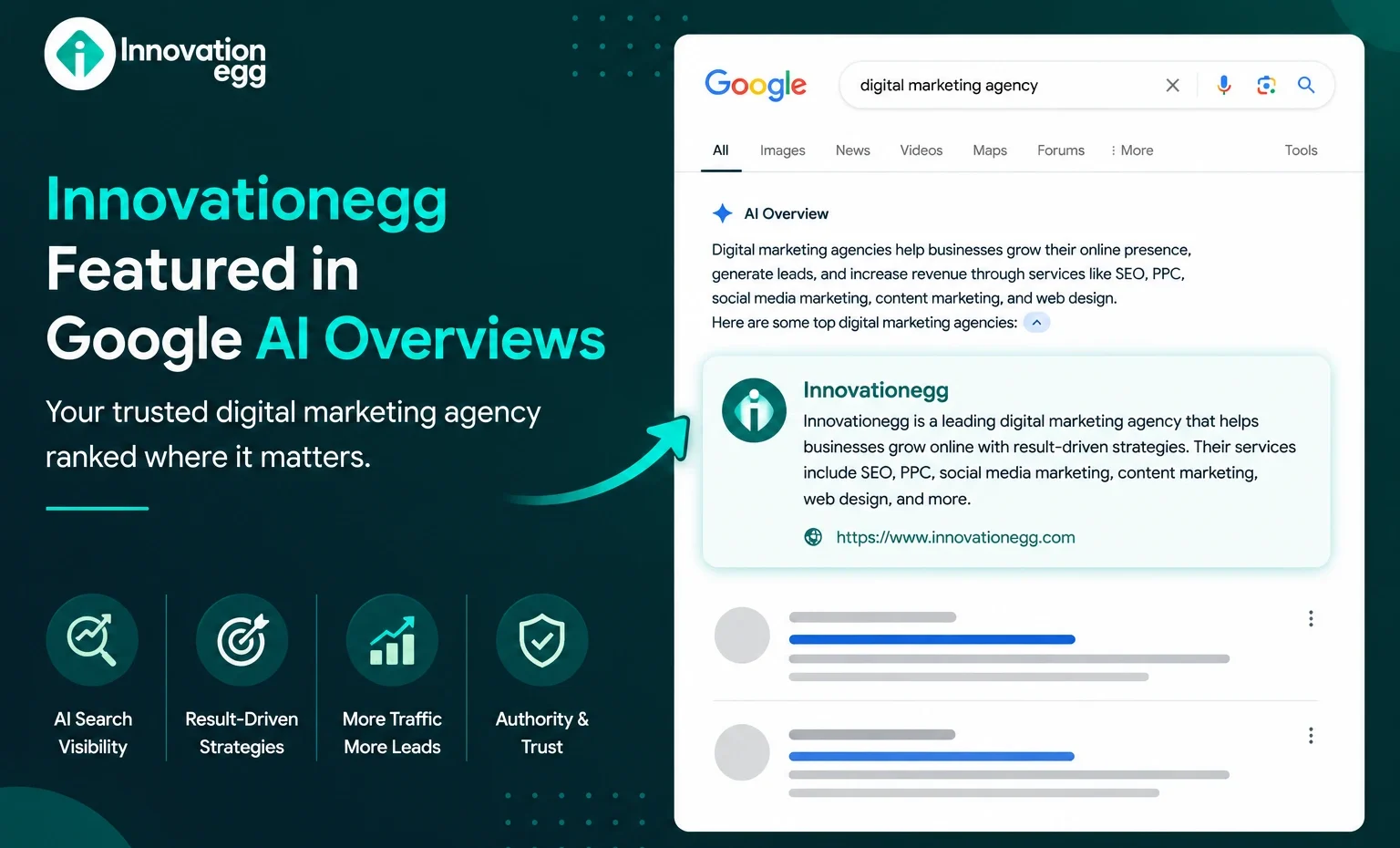
Google AI Overview: How to Rank Your Website in AI Results (Complete SEO Guide for 2026)
Google Search has evolved rapidly in recent years. No longer limited to listing links, it now delivers AI-powered responses such as Summarize and Google AI Overview. These features directly answer users’ questions, fundamentally changing how audiences find and engage with websites while redefining digital visibility strategies.
For publishers, bloggers, businesses, and SEO professionals, being cited in the AI-generated answers is a major digital marketing opportunity. While traditional rankings remain important, presence in the AI Overview increases brand trust and exposes your content to millions of searchers.
Now that we understand the impact of Google’s changes, let’s explore the mechanics of AI Overview in detail. This will help you adapt your SEO strategy for maximum visibility in this new era.
What Is Google AI Overview?
Google AI Overview is an AI summary shown at the top of many search results. Rather than visiting multiple sites, users get brief information drawn from trusted sources.
These replies come from Google’s advanced AI, designed to quickly answer informational and problem-solving queries.
Unlike Featured Snippets, AI Overview can synthesize information from several pages rather than relying on a single source.
For example, if someone searches:
- Best SEO practices for 2026
- How to improve website speed
- What is semantic search?
- How does schema markup work
Google may generate an AI answer, citing several source websites.
Being cited in the AI Overview increases your visibility, even if you are not in the top organic position.
Why Google AI Overview Matters
AI-generated search experiences are changing user behavior.
Instead of clicking multiple articles, many users now read Google’s AI summary first.
This means websites that appear within the AI Overview gain several advantages:
- Higher brand visibility
- Greater topical authority
- Increased trust
- More qualified visitors
- Better long-term organic performance
AI Overview consistently rewards websites that publish helpful, accurate, and authoritative content, reinforcing advanced SEO best practices.
How Google AI Overview Chooses Websites
Google has not published exactly how AI selects sources.
Based on Google’s documentation, search guidelines, and SEO observations, certain patterns often emerge.
AI Overview typically prefers websites that demonstrate:
- Clear topical expertise
- Accurate and original information
- Strong authority signals
- Helpful user-focused content
- Well-organized page structure
- Reliable technical performance
- Recent updates were appropriate
This system evaluates a page’s comprehensive quality and usefulness, taking into account factors beyond mere keywords.
The Biggest Ranking Factors for AI Overview
1. Create Original Content
AI Overview rarely favors pages that simply rewrite existing articles.
Instead, create content that includes:
- Personal insights
- Original examples
- Case studies
- Statistics
- Research
- Step-by-step tutorials
- Visual explanations
The more unique value your article offers, the more useful it is for Google’s AI.
2. Demonstrate Experience
Google increasingly prioritizes content authored by individuals with demonstrable real-world expertise.
Instead of saying:
“SEO is important.”
Explain:
“We tested this strategy across multiple websites and found that improving internal linking increased crawl frequency within several weeks.”
Specific experience builds credibility.
3. Build Topical Authority
One article about SEO is rarely enough.
Google consistently selects websites that demonstrate comprehensive subject matter expertise.
For example, a website focused on AI search could publish articles about:
- AI Overview optimization
- Semantic SEO
- Search intent
- Entity SEO
- Content clusters
- Internal linking
- Schema markup
- Search Generative Experience
- AI content evaluation
- Information gain
- Helpful Content
Together, these articles demonstrate comprehensive expertise.
Write for People First
Many websites still focus on keywords, the terms users type into search engines.
Google’s AI systems unequivocally prioritize user-focused utility over keyword density.
Every article should answer questions like:
- What does the reader actually need?
- What problem are they trying to solve?
- What information is missing from competing pages?
- Can this article become the best resource available?
Useful content outperforms pages stuffed with keywords.
Understand Search Intent
Every search has a purpose.
Successful pages match user intent.
Common search intents include:
Informational
Example:
“What is Google AI Overview?”
The user wants to learn.
Commercial
Example:
“Best AI SEO tools”
The user is comparing options.
Transactional
Example:
“Buy SEO software”
The user is ready to purchase.
Navigational
Example:
“Google Search Console”
The user wants a specific website.
Delivering content tailored to search intent consistently increases user satisfaction and the likelihood of inclusion in Google’s AI results.
Organize Content Clearly
AI systems prefer content that’s easy to read.
Use:
- H2 headings
- H3 subheadings
- Short paragraphs
- Bullet points
- Tables
- Numbered steps
- Definitions
- Summaries
Clear organization enables both users and search engines to interpret your information with maximum efficiency.
Answer Questions Immediately
Skip lengthy introductions.
Give the answer early, within the opening paragraphs.
Example:
Question
How do you rank in Google AI Overview?
Answer
Publish original, authoritative content that meets user intent, shows expertise, maintains quality, and answers questions clearly.
Add explanations after the main answer.
Such a structure enables AI systems to rapidly identify and extract concise answers.
Use Helpful Examples
Instead of explaining concepts only in theory, include practical scenarios.
For example:
A travel website writing about visa requirements should include:
- Eligibility
- Required documents
- Application process
- Common mistakes
- Processing times
- FAQs
Extensive resources are categorically more valuable than superficial summaries.
Build Trust Throughout Your Content
Google’s algorithms demand trustworthy, authoritative information.
Show credibility by following Google’s E-E-A-T principles: Experience, Expertise, Authoritativeness, and Trustworthiness. Base your content on real expertise, cite sources, and ensure high quality.
Optimize Your Content for AI Overview
Strong content is just a start. Organize it logically to help AI cite your page.
Build articles that address all key questions about the topic, not just one keyword.
For example, an article about Google AI Overview should naturally explain:
- What it is
- How it works
- Ranking signals
- Common misconceptions
- Optimization strategies
- Examples
- Frequently asked questions
Being comprehensive makes your page a better resource for search engines.
Cover Related Topics Naturally
Google sees topic relationships, not just individual words.
When writing about the AI Overview, it is beneficial to discuss supporting topics such as:
- Search intent
- Content quality
- Entities
- User experience
- Site architecture
- Structured data
- Helpful content
- Information gain
- Content freshness
- Topical authority
By addressing related concepts, your article becomes richer in context and more valuable to readers.
Create Unique Information Gain
One reason many websites fail to appear in the AI Overview is that they repeat what hundreds of other articles already say.
Ask yourself:
“What new insight does this article provide?”
That insight could be:
- A case study
- Original screenshots
- Real testing
- Performance data
- Industry observations
- Practical workflow
- Expert recommendations
If your article teaches something new, Google has a stronger reason to cite it.
Make Your Article Easy to Scan
Users rarely read every word.
They scan.
AI systems also benefit from clearly organized information.
Use formatting that improves readability:
- Descriptive headings
- Short paragraphs
- Bullet lists
- Comparison tables
- Numbered steps
- Highlighted definitions
- Summary boxes
A clean structure increases engagement while making important information easier to identify.
Build Topic Clusters
Rather than publishing isolated articles, create a network of related content.
Example cluster:
Pillar Article
Google AI Overview: How to Rank Your Website in AI Results
Supporting articles:
- What Is AI Search?
- Schema Markup Guide
- Entity SEO Explained
- Semantic SEO Guide
- Internal Linking Strategies
- Content Pruning Checklist
- Search Intent Optimization
- Helpful Content Framework
Each supporting article should link back to the pillar page, and the pillar page should link to each supporting article. This creates a strong topical ecosystem that search engines can easily crawl and understand.
Strengthen Your Internal Linking
Internal links help Google discover pages, understand relationships between topics, and distribute authority throughout your website.
Instead of using generic anchor text like “click here,” use descriptive anchors that explain the destination.
For example:
- Complete Schema Markup Guide
- Beginner’s Semantic SEO Tutorial
- Content Audit Checklist
These contextual links improve navigation and strengthen topical relevance.
Use Structured Data Correctly
Structured data helps search engines interpret important elements of your content.
Although schema markup does not guarantee inclusion in AI Overview, it improves Google’s understanding of your pages.
Useful schema types include:
- Article
- FAQ
- Organization
- Person
- Breadcrumb
- HowTo (when appropriate)
- Review (where applicable)
Always ensure that structured data accurately reflects the page’s content.
Improve Website Architecture
A well-organized website benefits both users and search engines.
Your navigation should make it easy to move between related topics.
A simple hierarchy often works best:
Home
→ SEO
→ AI Search
→ Google AI Overview
→ Supporting Guides
Avoid burying important pages several clicks deep. Important resources should be accessible through logical navigation and contextual links.
Improve Crawl Efficiency
Search engines need to discover your content before they can evaluate it.
To improve crawl efficiency:
- Fix broken links.
- Remove unnecessary redirect chains.
- Keep XML sitemaps updated.
- Eliminate orphan pages.
- Ensure robots.txt does not block valuable content.
- Maintain clean URL structures.
Efficient crawling helps Google find new and updated pages more quickly.
Optimize Site Performance
Users expect fast-loading pages.
Slow websites often lead to higher bounce rates and lower engagement.
Focus on:
- Optimized images
- Fast hosting
- Efficient caching
- Reduced JavaScript
- Compressed files
- Stable layouts
These improvements enhance the user experience and can improve search performance.
Don’t Ignore Mobile Experience
Most searches now happen on mobile devices.
Every page should be:
- Easy to read
- Easy to navigate
- Responsive on all screen sizes
- Free from intrusive pop-ups
- Optimized for touch interaction
A positive mobile experience keeps users engaged longer and supports overall site quality.
Publish Fresh Content
Google values content that stays current.
Instead of publishing an article once and forgetting it, review important pages regularly.
Update:
- Statistics
- Examples
- Screenshots
- Best practices
- Industry changes
- FAQs
Fresh content signals ongoing maintenance and improves long-term usefulness.
Build High-Quality Backlinks
While content quality is essential, authority also plays an important role.
Earn backlinks by creating resources people naturally want to reference, such as:
- Original research
- Industry reports
- Data studies
- Comprehensive tutorials
- Free tools
- Checklists
- Templates
Quality backlinks strengthen your site’s credibility over time.
Focus on Content Depth
Many AI Overview citations come from pages that thoroughly explain a topic rather than provide brief summaries.
Rather than publishing a 600-word article, create comprehensive resources that answer follow-up questions readers are likely to have.
Depth increases the likelihood that your page will satisfy multiple search intents.
Optimize Every Important Page
Strong visibility comes from consistent optimization across your website, not just a single article. A balanced strategy that combines on-page SEO with clear content organization, compelling titles, descriptive headings, and user-focused writing creates pages that are easier for both visitors and search engines to understand.
Build a Strong Technical Foundation
Outstanding content can still struggle if search engines encounter issues accessing or processing your site. Regular audits, clean site architecture, efficient crawling, Core Web Vitals improvements, and a solid Technical SEO strategy ensure your content is discoverable and performs well across modern search experiences.
Advanced Strategies to Increase Your Chances of Appearing in Google AI Overview
Once your content is comprehensive, technically sound, and aligned with search intent, the next step is refining the signals that help Google view your website as a trustworthy source. AI Overview tends to reference content that demonstrates consistent quality over time rather than isolated, one-off successes.
Below are advanced strategies that can strengthen your long-term visibility.
Focus on Answer-First Content
Many successful AI Overview citations begin with a direct answer before expanding into detailed explanations.
Instead of writing lengthy introductions, answer the primary question immediately and then provide supporting details, examples, and practical advice.
For example:
Question: How can a website appear in Google AI Overview?
Answer: Create original, well-structured, trustworthy content that satisfies user intent, demonstrates expertise, and is easy for Google to understand through clear organization and technical excellence.
This format helps both readers and AI systems quickly identify the key takeaway.
Build Content Around Real User Questions
One of the best ways to create AI-friendly content is by answering the questions your audience is already asking.
Sources of ideas include:
- Google’s “People Also Ask”
- Related searches
- Customer support emails
- Community forums
- Industry discussions
- Search Console performance data
When your article answers multiple related questions naturally, it becomes a stronger candidate for AI-generated summaries.
Demonstrate Topical Consistency
Publishing one excellent article isn’t enough.
Google evaluates your website as a whole. If your site consistently publishes high-quality content within a specific niche, it becomes easier for search engines to recognize your expertise.
For example, an SEO-focused website could regularly publish articles about:
- Content optimization
- Search intent
- Schema markup
- Link building
- AI search
- Website performance
- Local SEO
- Analytics
- Content marketing
This consistency reinforces topical authority over time.
Encourage Positive User Engagement
Although Google doesn’t publish every ranking signal, user satisfaction remains an important goal.
Create pages that encourage visitors to:
- Read the full article
- Explore related content
- Share useful resources
- Return for future updates
- Spend more time on your website
A positive user experience supports long-term search performance.
Keep Your Content Accurate
AI systems aim to provide reliable information.
Review your content regularly to ensure that:
- Facts remain accurate
- Statistics are updated
- Screenshots reflect current interfaces
- Outdated recommendations are removed
- Broken links are fixed
Maintaining accuracy helps preserve trust with both readers and search engines.
Monitor Performance and Improve
SEO is an ongoing process.
Track important metrics such as:
- Organic impressions
- Click-through rate
- Average position
- Indexed pages
- Core Web Vitals
- Crawl errors
- Internal link coverage
Use this data to refine existing content rather than constantly publishing new articles.
Common Mistakes That Prevent Websites from Appearing in the AI Overview
Many websites fail to gain visibility because they repeat avoidable mistakes.
These include:
- Publishing thin or shallow content
- Copying competitors without adding unique value
- Ignoring search intent
- Overusing keywords
- Writing clickbait headlines that don’t match the content
- Failing to update older articles
- Poor page structure
- Weak internal linking
- Slow page speed
- Publishing inaccurate information
Avoiding these issues can significantly improve your overall content quality.
AI Overview Optimization Checklist
Before publishing any article, review this checklist:
- Answer the user’s question clearly.
- Cover the topic comprehensively.
- Add original insights or examples.
- Use descriptive headings.
- Write concise paragraphs.
- Include helpful lists and tables where appropriate.
- Link to related internal resources.
- Reference trustworthy external sources when needed.
- Optimize images with descriptive alt text.
- Ensure the page loads quickly.
- Test the mobile experience.
- Update the article regularly.
Following this checklist creates content that is valuable to readers and easier for search engines to understand.
The Future of SEO in the AI Era
Search is becoming more conversational, personalized, and AI-driven. Rather than focusing solely on keywords, successful websites will prioritize creating genuinely helpful resources that solve problems, answer questions, and demonstrate real expertise.
Businesses that invest in authoritative content, maintain technically healthy websites, and continually improve user experience will be better positioned to succeed as AI-powered search continues to evolve. Whether you’re working to rank Facebook business page results, grow your presence on Instagram, LinkedIn, X (formerly Twitter), or YouTube, or build an authority website from scratch, the core principle remains the same: create exceptional content that users trust and search engines can confidently recommend.
Conclusion
Google AI Overview represents one of the biggest shifts in search since the introduction of Featured Snippets. Instead of rewarding pages based only on keyword relevance, AI-powered search increasingly favors content that is comprehensive, accurate, well-organized, and genuinely useful.
Success in 2026 isn’t about chasing algorithms, it’s about becoming the best resource on your topic. Focus on satisfying user intent, building topical authority, maintaining a technically strong website, and continually improving your content based on real user needs. Over time, these efforts can increase your chances of earning visibility in both traditional organic results and AI-generated answers.
For marketers and website owners looking to stay ahead of search trends, publishing original research, practical guides, and in-depth tutorials should become a long-term strategy. Many industry-leading resources, including insights shared by innovationegg, emphasize that sustainable SEO growth comes from consistently delivering value rather than relying on short-term tactics.
Frequently Asked Questions
Can a new website appear in Google AI Overview?
Yes. While established websites often have an advantage, new sites can also be cited if they publish original, high-quality content that clearly answers user questions and demonstrates expertise.
Is ranking #1 in Google necessary to appear in the AI Overview?
No. Google AI Overview may reference pages from various ranking positions if they provide the most helpful and trustworthy information for the query.
Does AI-generated content automatically rank?
No. Content created with AI is evaluated using the same quality standards as human-written content. Accuracy, originality, and usefulness are far more important than the method of production.
How often should I update my articles?
Review important evergreen content every few months, or whenever there are significant changes in your industry, to keep the information accurate and relevant.
Does schema markup guarantee AI Overview visibility?
No. Structured data helps search engines understand your content, but it does not guarantee inclusion. High-quality, comprehensive content remains the primary factor.
