

YouTube SEO Best Practices: The Complete Guide to Ranking Videos Higher in 2026
With billions of users and millions of daily uploads, YouTube is highly competitive. Quality videos alone aren’t enough; you must optimize them for search. That’s where YouTube SEO matters.
Using the right YouTube SEO practices boosts visibility, draws more viewers, increases engagement, and grows your channel. This guide shows you how to rank higher in 2026.
What Is YouTube SEO?
YouTube SEO means optimizing videos, channels, and metadata to rank higher in search and appear more in recommendations. YouTube evaluates signals like relevance, watch time, CTR, retention, and engagement.
The goal isn’t simply to rank; it is to deliver valuable content that keeps viewers watching.
Why YouTube SEO Matters in 2026
YouTube’s algorithm now favours viewer satisfaction over keyword stuffing or over-tagging. Videos that help solve problems or answer questions appear more prominently.
Effective optimization helps you:
- Reach a larger audience organically.
- Increase video watch time.
- Gain more subscribers.
- Improve channel authority.
- These benefits underscore why optimizing your YouTube strategy is essential. As you build your foundation with keyword research, consider the following steps:
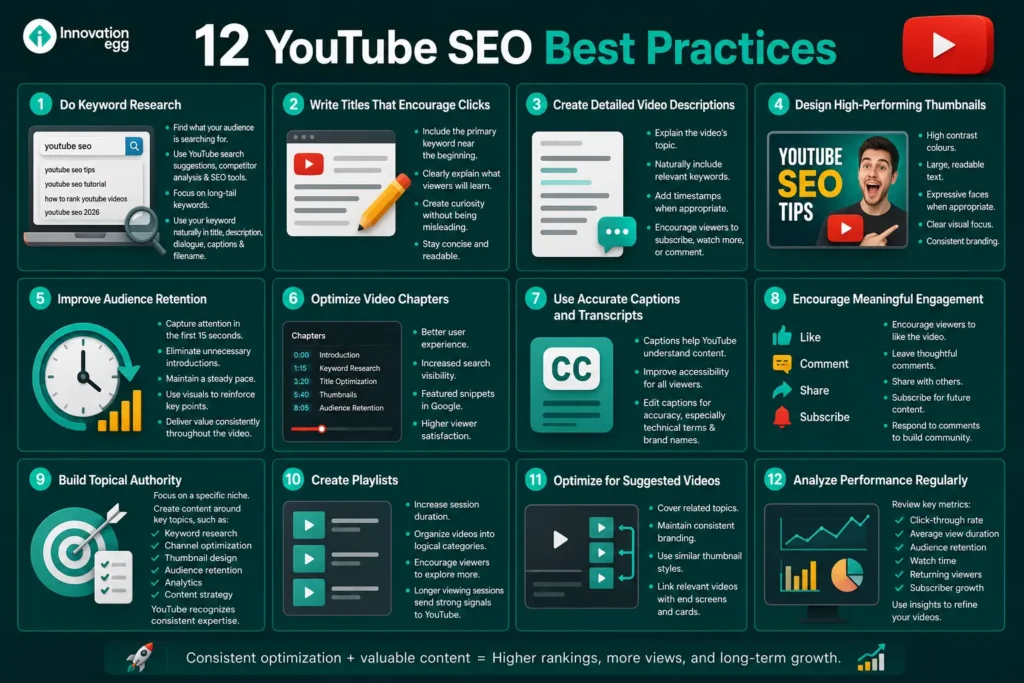
1. Start with Smart Keyword Research
Every successful YouTube video begins with proper keyword research.
Look for phrases your audience is actively searching for by using YouTube’s search suggestions, competitor analysis, and keyword research tools. Focus on long-tail keywords because they often have lower competition and higher conversion potential.
Include your primary keyword naturally in your:
- Video title
- Description
- Spoken dialogue
- Closed captions
- File name before uploading
As you identify the right keywords, keep in mind that forcing keywords into your content is unnecessary. Natural optimization tends to yield better long-term results. With your keywords in place, the next critical element is your video’s title.
2. Write Titles That Encourage Clicks
Your title is a top-ranking signal and drives click-through rate.
A strong title should:
- Include the primary keyword near the beginning.
- Clearly explain what viewers will learn.
- Create curiosity without being misleading.
- Stay concise and readable.
This approach sets your videos apart and lays the groundwork for the next step—crafting strong video descriptions.
3. Create Detailed Video Descriptions
Creators often ignore descriptions, though they give key context for YouTube’s algorithm.
Your description should:
- Explain the video’s topic.
- Naturally include relevant keywords.
- Add timestamps when appropriate.
- Encourage viewers to subscribe, watch another video, or share their thoughts in the comments to boost engagement.
Strong descriptions can also boost your visibility in Google search. Next, let’s focus on the crucial role your video’s thumbnail plays.
4. Design High-Performing Thumbnails
A compelling thumbnail sharply boosts click-through rates.
Effective thumbnails typically feature:
- High contrast colours.
- Large, readable text.
- Expressive faces when appropriate.
- Clear visual focus.
- Consistent branding.
Ensure your thumbnail accurately represents your content and attracts viewers. Once your thumbnails are compelling, audience retention becomes vital.
5. Improve Audience Retention
Watch time isn’t enough. YouTube now prioritizes audience retention—how long viewers watch.
To improve retention:
- Capture attention within the first 15 seconds.
- Eliminate unnecessary introductions.
- Maintain a steady pace.
- Use visuals to reinforce key points.
- Deliver value consistently throughout the video.
Engaging videos not only drive recommendations but also prepare you for optimizing your content’s structure. Let’s explore using chapters effectively.
6. Optimize Video Chapters
Chapters make your content easier to navigate and enhance the viewing experience.
Benefits include:
- Better user experience.
- Increased search visibility.
- Featured snippets in Google.
- Higher viewer satisfaction.
Thoughtfully named chapters clarify your video and improve the viewer experience. Next, make your content accessible with accurate captions and transcripts.
7. Use Accurate Captions and Transcripts
Captions help YouTube understand content and improve accessibility.
Carefully editing your captions ensures clarity, especially when technical terms or brand names are involved. These practices make your content more inclusive. Now, let’s look at how to build deeper viewer engagement.
8. Encourage Meaningful Engagement
YouTube values genuine interactions.
Encourage viewers to:
- Like the video.
- Leave thoughtful comments.
- Share with others.
- Subscribe for future content, and share with your network to help the channel grow.
Responding to comments strengthens community and fosters conversation. With engagement growing, it’s time to focus on establishing your niche authority.
9. Build Topical Authority
Instead of creating unrelated videos, focus on a specific niche.
For example, if your channel teaches YouTube marketing, publish videos covering:
- Keyword research
- Channel optimization
- Thumbnail design
- Audience retention
- Analytics
- Content strategy
Over time, YouTube recognizes consistent subject expertise. Creating playlists is another way to reinforce that authority while encouraging ongoing viewing.
10. Create Playlists
Playlists increase session duration by encouraging viewers to watch multiple related videos.
Organize your content into logical categories, and invite viewers to explore more by following your playlists.
Longer viewing sessions send strong signals to YouTube. Another major traffic source is Suggested Videos. Let’s look at how to optimize for them.
11. Optimize for Suggested Videos
Suggested videos generate a significant portion of YouTube traffic.
Increase your chances by:
- Covering related topics.
- Maintaining consistent branding.
- Using similar thumbnail styles.
- Linking relevant videos with end screens and cards.
Keeping viewers engaged benefits both your channel and YouTube. Regular analysis ensures your efforts continue to deliver results.
12. Analyze Performance Regularly
Optimization is continuous.
Review metrics such as:
- Click-through rate
- Average view duration
- Audience retention
- Watch time
- Returning viewers
- Subscriber growth
Use these insights to refine your videos and take action on your analytics to drive continued improvement.
Common YouTube SEO Mistakes
Avoid these common errors:
- Keyword stuffing.
- Misleading clickbait.
- Low-quality thumbnails.
- Ignoring audience retention.
- Publishing inconsistently.
- Skipping descriptions.
- Using irrelevant tags.
- Neglecting analytics.
Small improvements across factors often outperform single tactics.
The Role of Professional SEO Support
While creators can implement many optimization techniques independently, businesses managing multiple marketing channels may benefit from professional SEO Services that integrate YouTube optimization with broader search strategies. A coordinated approach can strengthen both video visibility and website traffic. To maximize value, reinforce your videos through a broader content ecosystem.
Build a Strong Content Ecosystem
Every strong channel relies on supporting resources. Creating blog posts, tutorials, case studies, and relevant links helps users find information and builds your expertise across platforms. Businesses that combine YouTube optimization with social media marketing Services can further expand their reach, strengthen audience engagement, and create a more effective digital marketing strategy.
Looking Ahead
AI, personalized recommendations, and user behavior will keep shaping YouTube rankings in 2026. Creators who focus on quality, consistency, and user experience have the best chance for growth.
Brands that keep learning and embrace digital innovation can better adapt as algorithms change. Now, let’s summarize key takeaways and best practices.
Final Thoughts
YouTube SEO in 2026 isn’t just adding keywords to titles. Success comes from valuable content that meets viewer needs, optimizing every video aspect, keyword research, thumbnails, retention, and analytics.
Focus on solving real problems, publish consistently, and act on performance data after each upload. Apply these best practices, and encourage viewers to like, comment, and subscribe so your channel can thrive.
Frequently Asked Questions
1. What is YouTube SEO?
YouTube SEO is the process of optimizing videos, channel settings, titles, descriptions, thumbnails, and other elements to improve visibility in YouTube search results and recommendations. The goal is to increase organic views, watch time, and audience engagement.
2. How long does it take for YouTube SEO to show results?
The timeline varies depending on your niche, competition, content quality, and channel authority. Some videos may gain traction within a few days, while others can take several weeks or months to rank higher and generate consistent traffic.
3. Are tags still important for YouTube SEO in 2026?
Tags have a relatively small impact compared to other ranking factors. While they can help YouTube understand your content, creators should focus more on high-quality titles, descriptions, audience retention, thumbnails, and viewer engagement.
4. What are the most important YouTube ranking factors?
Some of the most important ranking factors include audience retention, watch time, click-through rate (CTR), keyword relevance, viewer engagement, upload consistency, and overall channel authority.
5. How many keywords should I use in my video description?
Rather than focusing on keyword quantity, use your primary keyword naturally and include a few related terms where they fit. The description should be informative, easy to read, and provide value to viewers.
6. Do YouTube Shorts benefit from SEO?
Yes. YouTube Shorts can rank in both YouTube search and recommendations. Optimizing the title, description, captions, and overall content relevance can improve discoverability and help Shorts reach a larger audience.
7. Can YouTube videos rank on Google Search?
Yes. Well-optimized YouTube videos frequently appear in Google search results, especially for tutorials, reviews, educational content, and how-to searches. Using descriptive titles and detailed video descriptions can improve your chances of ranking.
8. How often should I upload videos for better YouTube SEO?
Consistency is more important than frequency. Whether you publish once a week or twice a month, maintaining a regular upload schedule helps build audience trust and provides more opportunities for YouTube to recommend your content.
