

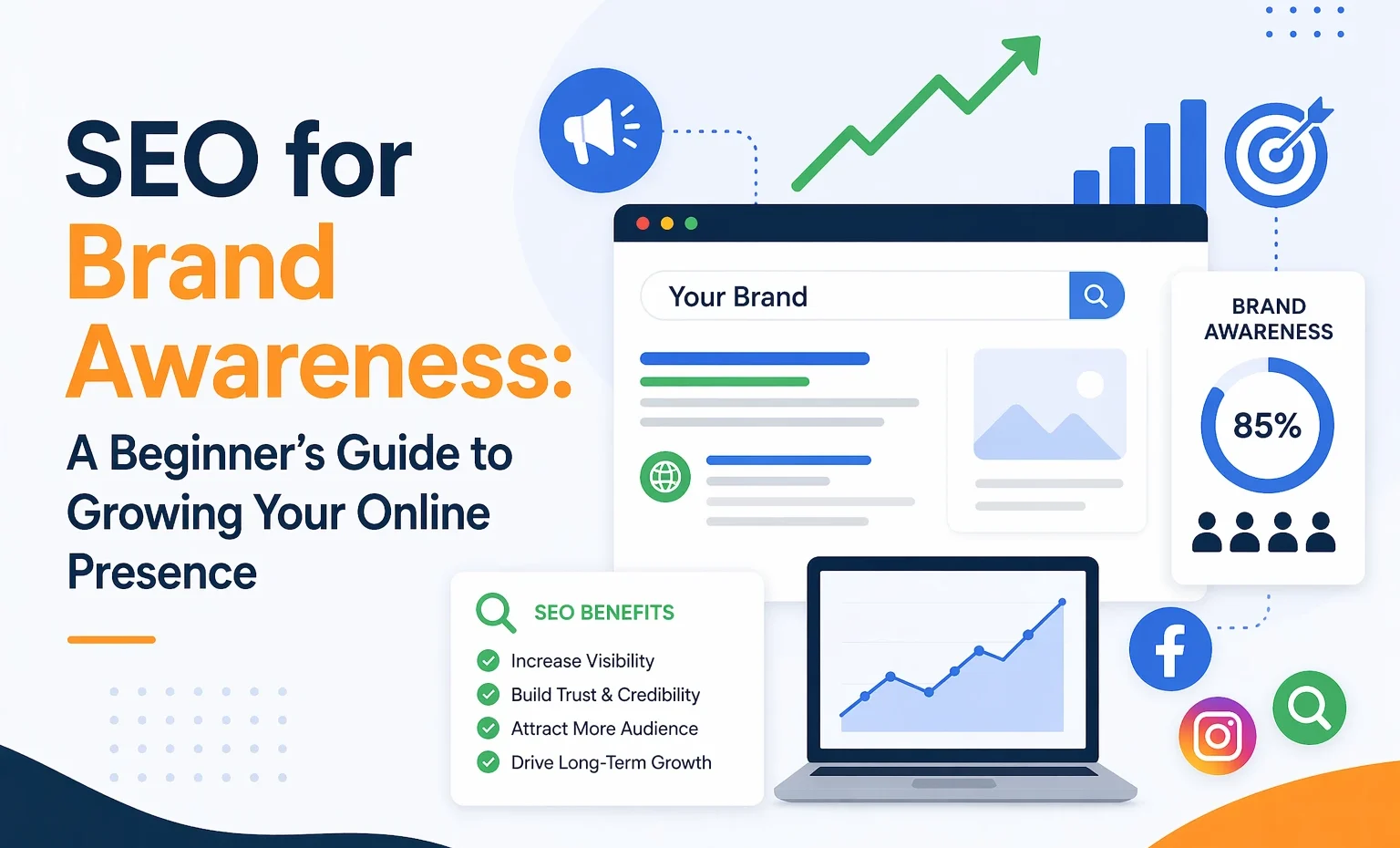
SEO for Brand Awareness: A Beginner’s Guide to Growing Your Online Presence
In today’s digital world, simply having a website is not enough. With millions of businesses competing for attention online, building a recognizable and trusted brand has become essential. This is where SEO for brand awareness plays a powerful role. It helps your business become more visible, memorable, and credible in your target audience’s eyes.
Before we dive in, let’s look at how SEO can do more than drive more visitors; it can transform your brand’s visibility online. This guide outlines key steps for using SEO to enhance your online presence and build a strong brand identity. By the end, you’ll know the main actions to focus on for brand growth.
What is SEO for Brand Awareness?
SEO (Search Engine Optimization) for brand awareness focuses on increasing your visibility in search engine results so that more people discover and recognize your brand. Instead of focusing solely on conversions or sales, this strategy aims to build familiarity and trust over time.
When your website consistently ranks well in search engines like Google, users begin to associate your brand with authority in your niche. Even if they don’t click immediately, repeated exposure builds recognition.
Why Brand Awareness Matters in SEO
Brand awareness is the foundation of long-term business success. Here’s why it matters:
1. Builds Trust and Credibility
People trust brands they recognize. When your website appears frequently in search results, users are more likely to view your business as reliable.
2. Increases Click-Through Rates
Users are more likely to click on a brand they’ve seen before, even if it’s not the first result.
3. Supports Long-Term Growth
SEO drives sustained growth by providing ongoing traffic long after initial efforts, making it an essential method for building brand awareness over time.
4. Enhances Customer Loyalty
When people repeatedly encounter your brand, it creates familiarity, which often leads to loyalty.
How SEO Helps Grow Your Online Presence
SEO not only boosts rankings but also increases your brand’s presence at every stage of the customer journey. Key takeaway: focus on appearing in multiple places, not just at the top of results.
Organic Search Visibility
Ranking for relevant keywords ensures your brand appears when users search for information related to your niche.
Content Distribution
High-quality content allows your brand to engage audiences through blogs, guides, and articles.
Multi-Channel Exposure
SEO content can also be shared across social media, email, and other platforms, increasing reach.
Keyword Research for Brand Awareness
Keyword research is the cornerstone of any SEO strategy. For brand awareness, prioritize:
Informational Keywords
These keywords target users looking for knowledge rather than products. For example:
- “What is digital marketing?”
- “How to improve website traffic.”
Branded Keywords
As your brand grows, people will start searching for your name directly.
Long-Tail Keywords
These are more specific phrases with less competition and greater relevance.
Tips for Beginners
- Use tools like Google Keyword Planner
- Focus on user intent rather than just search volume.
- Choose keywords relevant to your niche.
Creating High-Quality Content
Content, such as clear guides, answers, and stories, helps your brand stand out and establishes trust. Focus on topics that continuously reinforce your brand’s main message.
Types of Content to Create:
1. Blog Posts
Write informative and engaging articles that answer common questions in your industry.
2. Guides and Tutorials
Step-by-step guides position your brand as an authority.
3. Listicles
Easy-to-read lists attract more engagement and shares.
4. Evergreen Content
Create content that remains relevant over time, such as beginner guides.
On-Page SEO Techniques
Optimizing your website pages helps search engines understand your content.
Title Tags and Meta Descriptions
Use clear and engaging titles that include your target keywords.
Header Structure
Use H1, H2, and H3 headings to organize your content and improve readability.
Internal Linking
Link to related pages to guide users through your site, reinforce brand themes, and increase the chances that visitors understand and remember your brand.
Image Optimization
Use descriptive alt text and compressed images to enhance page speed and accessibility.
Off-Page SEO and Brand Authority
Off-page SEO focuses on building your brand’s reputation outside your website.
Backlinks
When other websites link to your content, it signals credibility to search engines.
Social Signals
Sharing your content on social media increases visibility and engagement.
Guest Blogging
Writing for other websites introduces your brand to new audiences.
The Role of Consistency in SEO
Being consistent in publishing, messaging, and design builds a brand that people will remember. Consistency is crucial for long-term recognition and trust.
Regular Content Publishing
Posting content consistently keeps your website active and relevant.
Uniform Branding
Maintain a consistent tone, style, and messaging across all platforms.
Continuous Optimization
Update old content to keep it fresh and accurate.
User Experience and SEO
User experience (UX) plays a major role in SEO success.
Website Speed
Fast-loading websites improve user satisfaction and rankings.
Mobile Friendliness
Ensure your site works well on mobile devices.
Easy Navigation
Users should find what they’re looking for quickly and easily.
Measuring Brand Awareness with SEO
Tracking your progress helps you understand what’s working.
Organic Traffic
Track the number of users visiting your site via search engines.
Search Rankings
Track your keyword rankings over time.
Brand Mentions
Look for mentions of your brand across the web.
Engagement Metrics
Use bounce rate, time on site, and pages per session to measure how engaged visitors are and how memorable your content is. Higher engagement usually means stronger brand awareness.
Common Mistakes to Avoid
Ignoring Content Quality
Low-quality content can harm your brand reputation.
Keyword Stuffing
Overusing keywords makes content unnatural and less effective.
Neglecting Mobile Optimization
A poor mobile experience can drive users away.
Lack of Patience
SEO success takes time. Stick to your plan, and trust that persistence will eventually lead to stronger brand awareness.
The Importance of Professional Support
While beginners can start with SEO on their own, collaborating with experts can accelerate growth. Many businesses seek professional SEO services to develop effective strategies, optimize content, and achieve efficient results.
Future Trends in SEO for Brand Awareness
SEO is constantly evolving. Here are some trends to watch:
AI and Search Algorithms
Search engines are becoming smarter, focusing on user intent and content quality.
Voice Search
Optimizing for conversational queries is becoming more important.
Video Content
Videos are increasingly appearing in search results.
E-E-A-T Principles
Experience, Expertise, Authority, and Trustworthiness are key ranking factors.
Conclusion
SEO for brand awareness helps your business stand out online. Focus on increasing visibility, providing valuable content, and creating a memorable user experience for the best results. Many businesses also partner with a digital marketing agency to strengthen their strategy and reach a wider audience.
To succeed with SEO, focus on steady progress, reliable habits, and continuous improvement. The main takeaway: stick with your strategies over time to outlast competitors and earn customer trust.
FAQs
1. What is SEO for brand awareness?
SEO for brand awareness focuses on increasing your visibility in search engines to make your brand more recognizable and trusted.
2. How long does it take to see results from SEO?
SEO is a long-term strategy, and it can take several months to see significant improvements.
3. Can small businesses benefit from SEO?
Yes, SEO is highly effective for small businesses looking to grow their online presence.
4. What type of content is best for brand awareness?
Informational, engaging, and evergreen content works best for building brand awareness.
5. Is social media important for SEO?
While not a direct ranking factor, social media helps increase visibility and traffic.
6. How often should I publish content?
Consistency is more important than frequency. Begin by publishing 1–2 posts per week.
7. What are long-tail keywords?
Long-tail keywords are specific phrases with lower competition and higher relevance.
8. Do I need professional help for SEO?
While you can start on your own, professional guidance can help you achieve faster and more effective results.
